Switches & Outlets
Tired switches and loose outlets replaced, dimmers and smart switches installed, cover plates brought back to matching.
Learn moreEV Chargers
More South Florida garages get an EV charger every month, and the physical install — mounting the unit at the right height, managing the cable so it isn’t lying in a puddle, commissioning the thing and getting it onto your Wi-Fi — is straightforward work I do regularly.
The circuit itself is the part that matters legally and safely. Running a new 240V circuit from your panel is licensed electrical work and needs a permit in Broward, Palm Beach and north Miami-Dade. I mount, manage and commission; the circuit gets done by a licensed electrician, and I’m happy to coordinate around them.
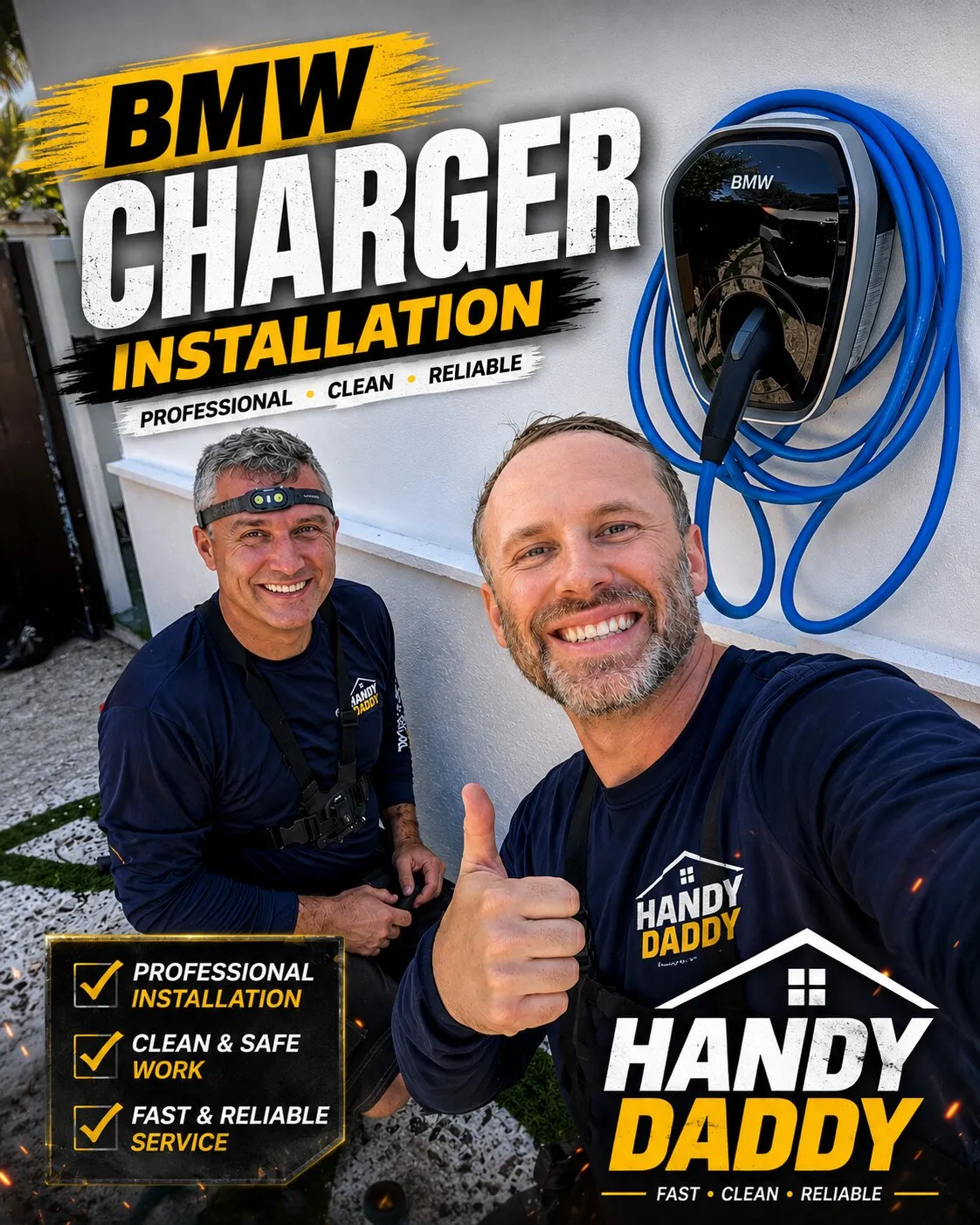
If you already have a suitable 240V receptacle — a NEMA 14-50 in the garage, for instance — a plug-in charger is a mounting and commissioning job and I can do the whole thing. If the circuit doesn’t exist yet, a licensed electrician has to run it and pull the permit. I’ll happily mount and set up the unit once they have energised it, which usually saves you their hourly rate on the fiddly part.
Most manufacturers want the unit somewhere around 40 to 50 inches off the floor. The bigger decision is which side of the garage — the cable has to reach your car’s port whether you back in or pull in, and with slack to spare. Thinking about this for five minutes beforehand saves relocating the unit later.
A 240V Level 2 charger on a 50A circuit delivers around 9.6 kW, which is roughly 30 to 40 miles of range per hour for most EVs. Standard 120V Level 1 from a wall outlet gives you 3 to 5 miles per hour — fine for a plug-in hybrid, not fine for a 300-mile battery. If you’re choosing, that’s the trade-off.
What this costs
Mounting and commissioning on an existing circuit is typically 1–2 hours. Electrical work by others is quoted separately by them.
No — that’s licensed electrical work requiring a permit in both Broward, Palm Beach and north Miami-Dade. I do the mounting, cable management and commissioning, and coordinate with your electrician.
Then it’s entirely a mounting and setup job and I can handle all of it.
For most people, whatever the vehicle manufacturer sells plus a universal J1772/NACS adapter, or a well-supported universal unit. The connector standard is shifting, so buying something with an upgrade path is worth doing.
Also useful
Tired switches and loose outlets replaced, dimmers and smart switches installed, cover plates brought back to matching.
Learn moreThe whole list in one visit — sticking doors, loose cabinet hinges, torn screens, wobbly railings and the rest of it.
Learn moreCloset systems, floating shelves and overhead garage racks — anchored into real structure so they carry the load you actually put on them.
Learn moreSend a photo of the job and get a straight answer, a real price and a date — usually the same day you ask.