TV Mounting
Flat screens mounted dead level on wood studs, concrete block or metal framing — with the cables hidden and the bracket torqued to spec.
Learn moreArt & Mirror Hanging
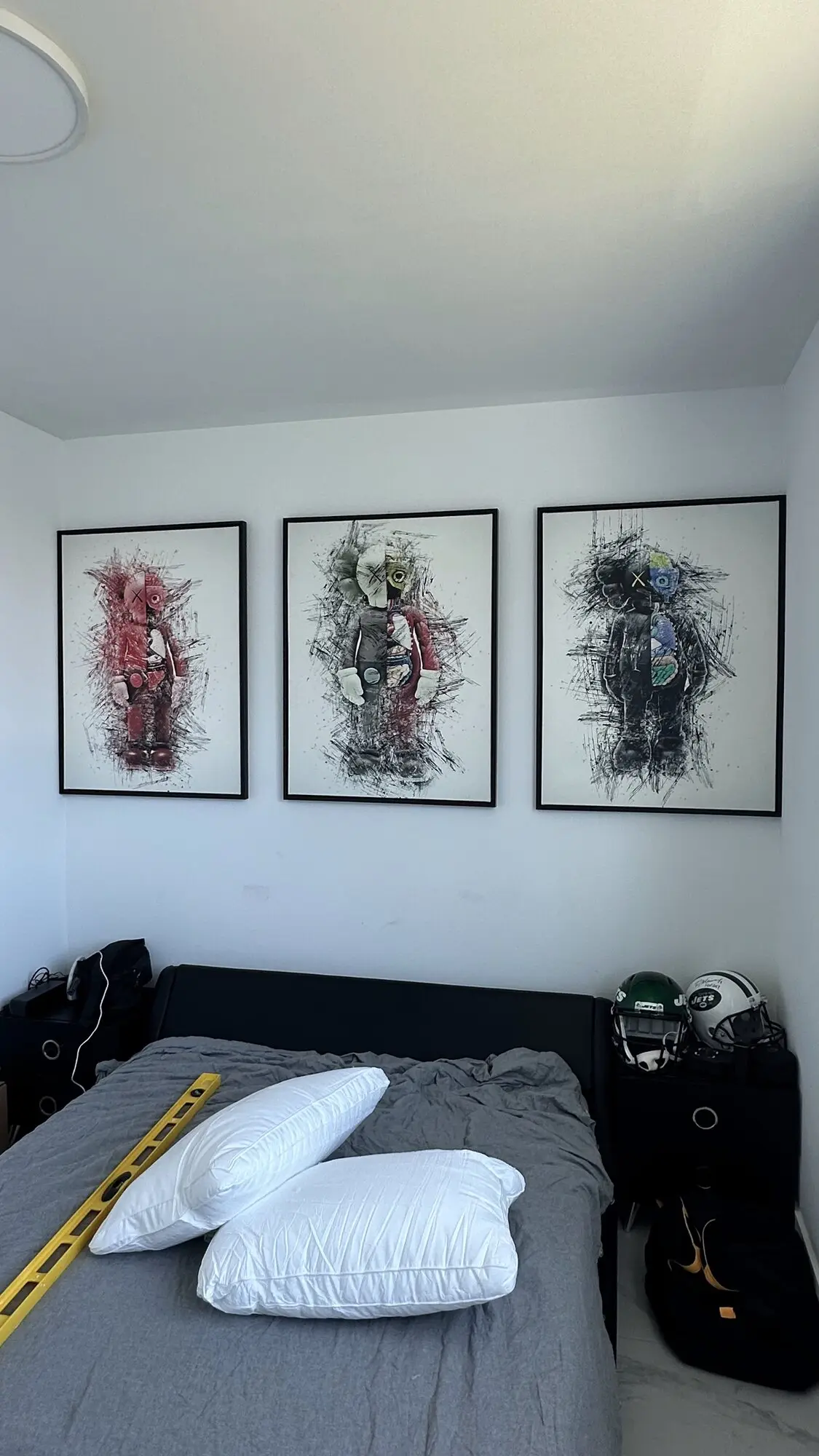
Anyone can put a nail in a wall. Getting six frames to read as one composition, at the right height, with even gaps, all dead level — that’s a layout problem before it’s a drilling problem.
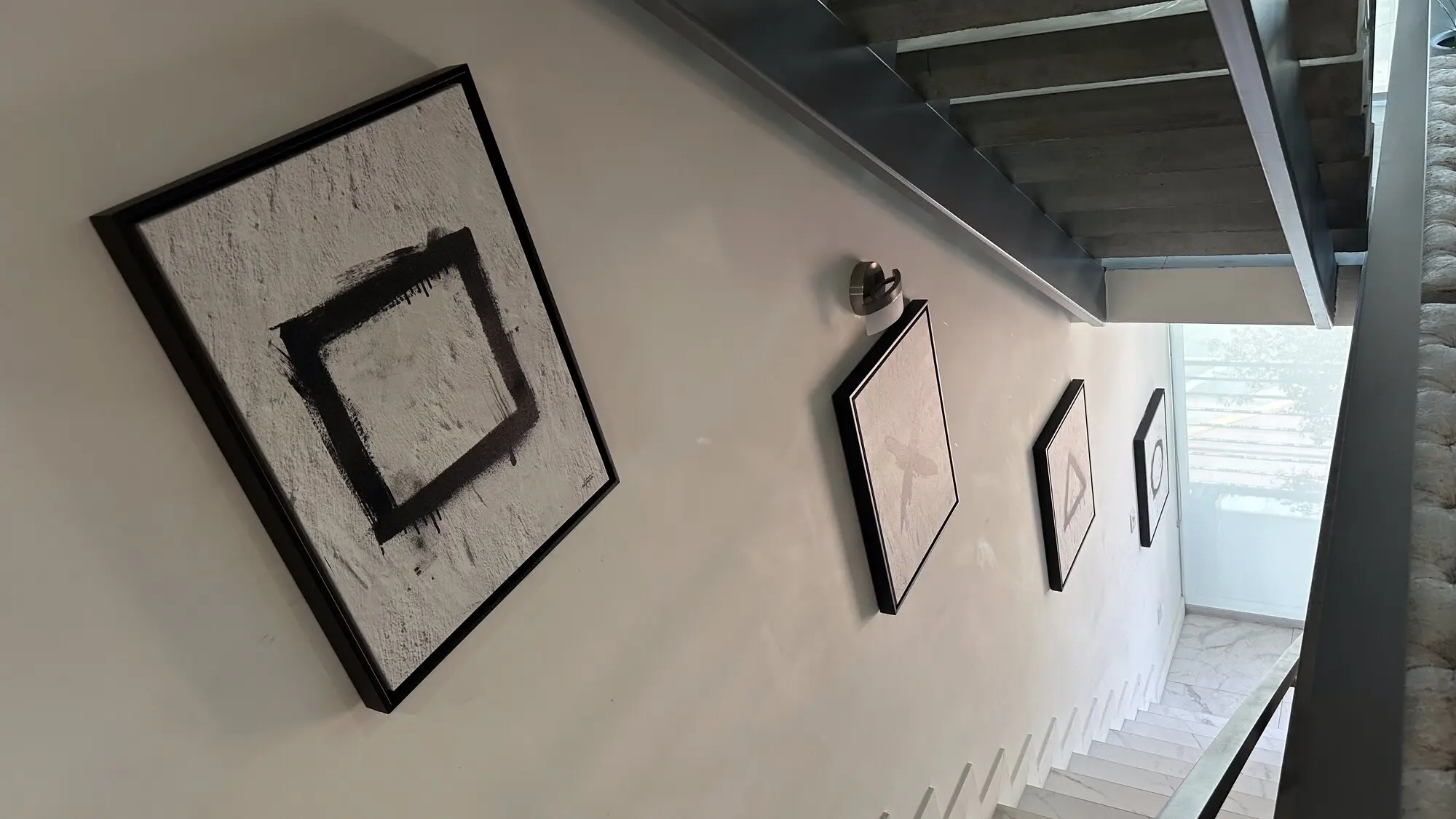
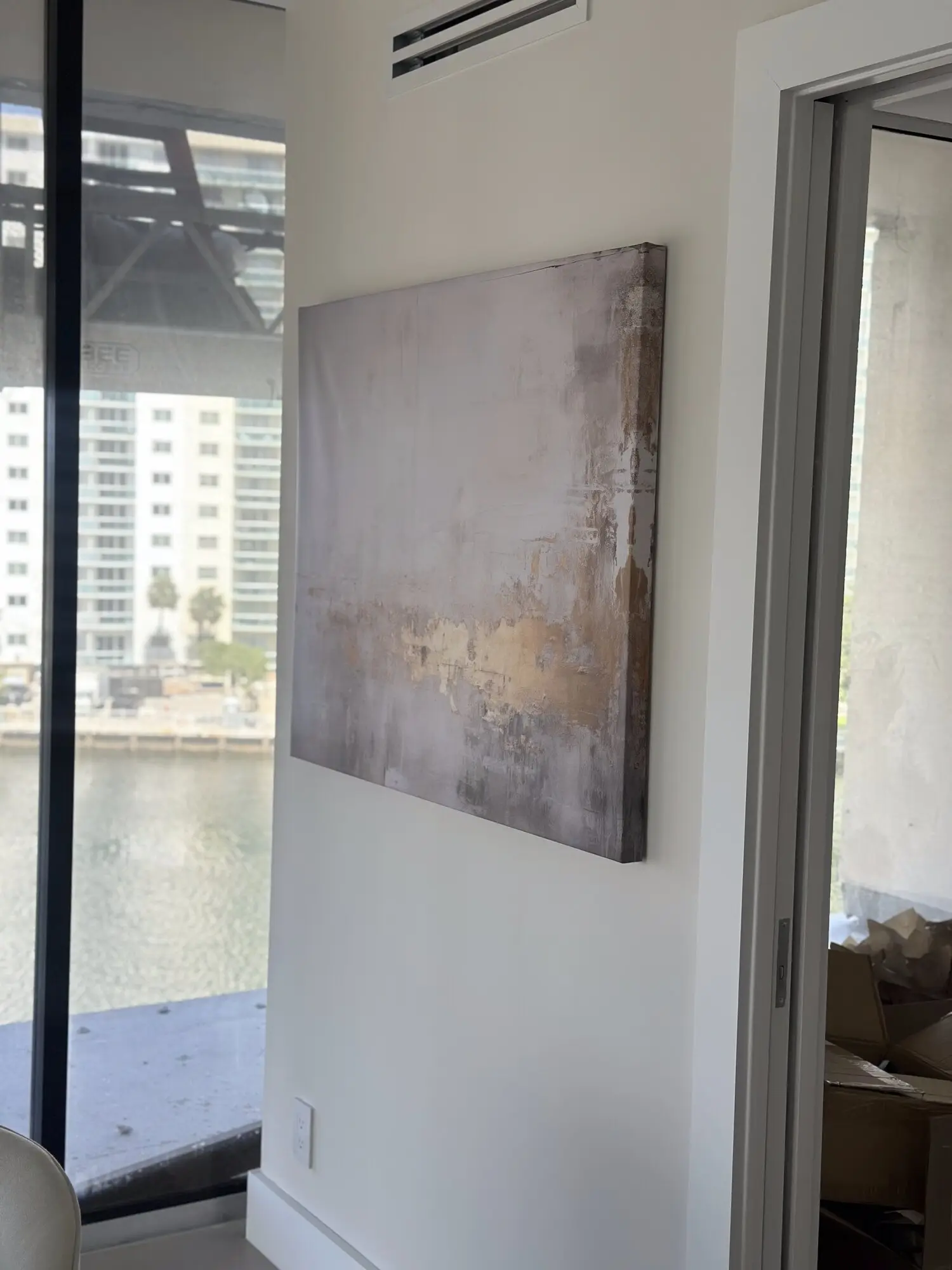
I hang single pieces, gallery walls, oversized canvases, heavy framed mirrors and picture lights. Layout gets planned on the floor or on paper first, marked with a laser, and only then does anything get drilled.
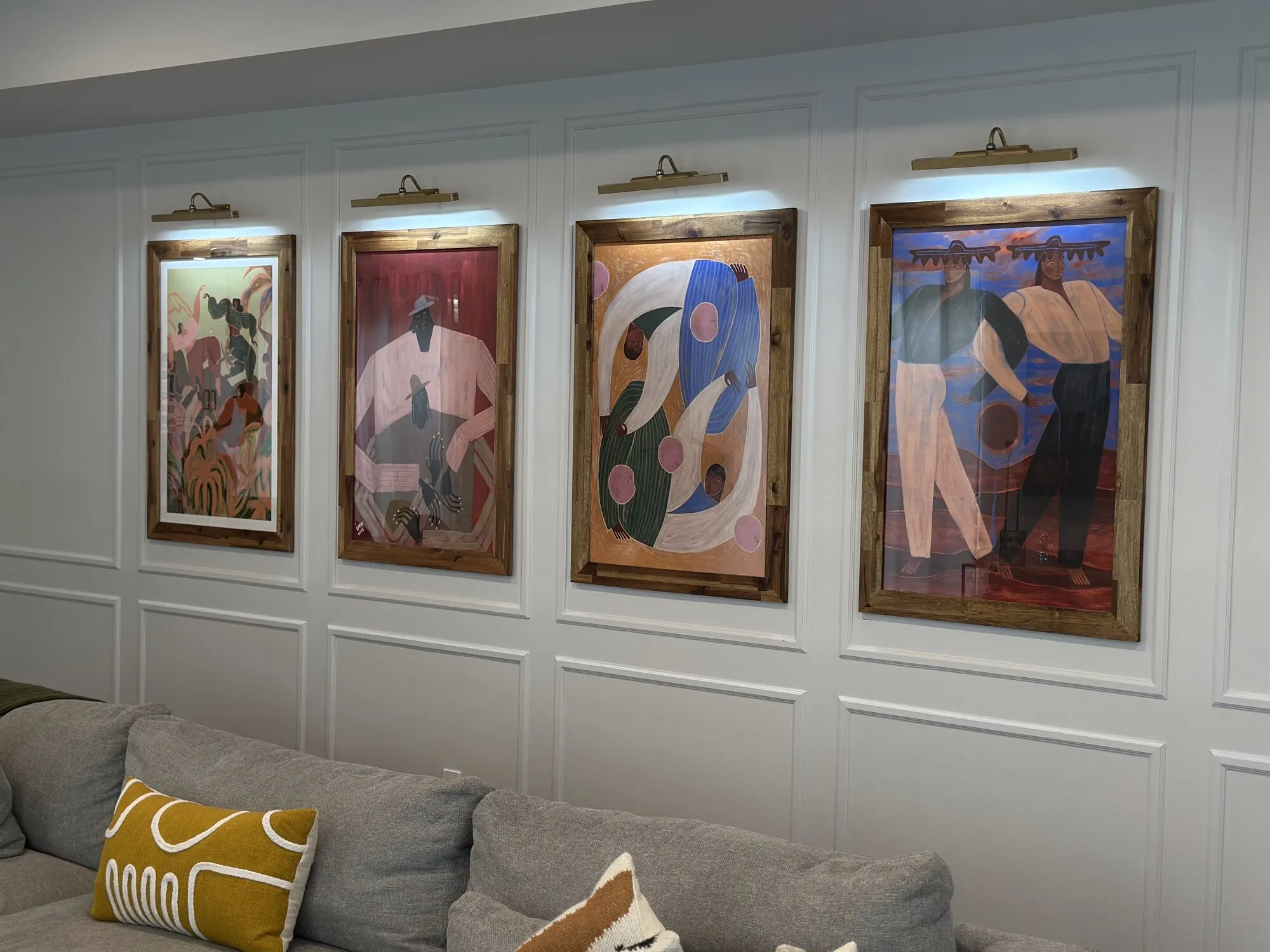
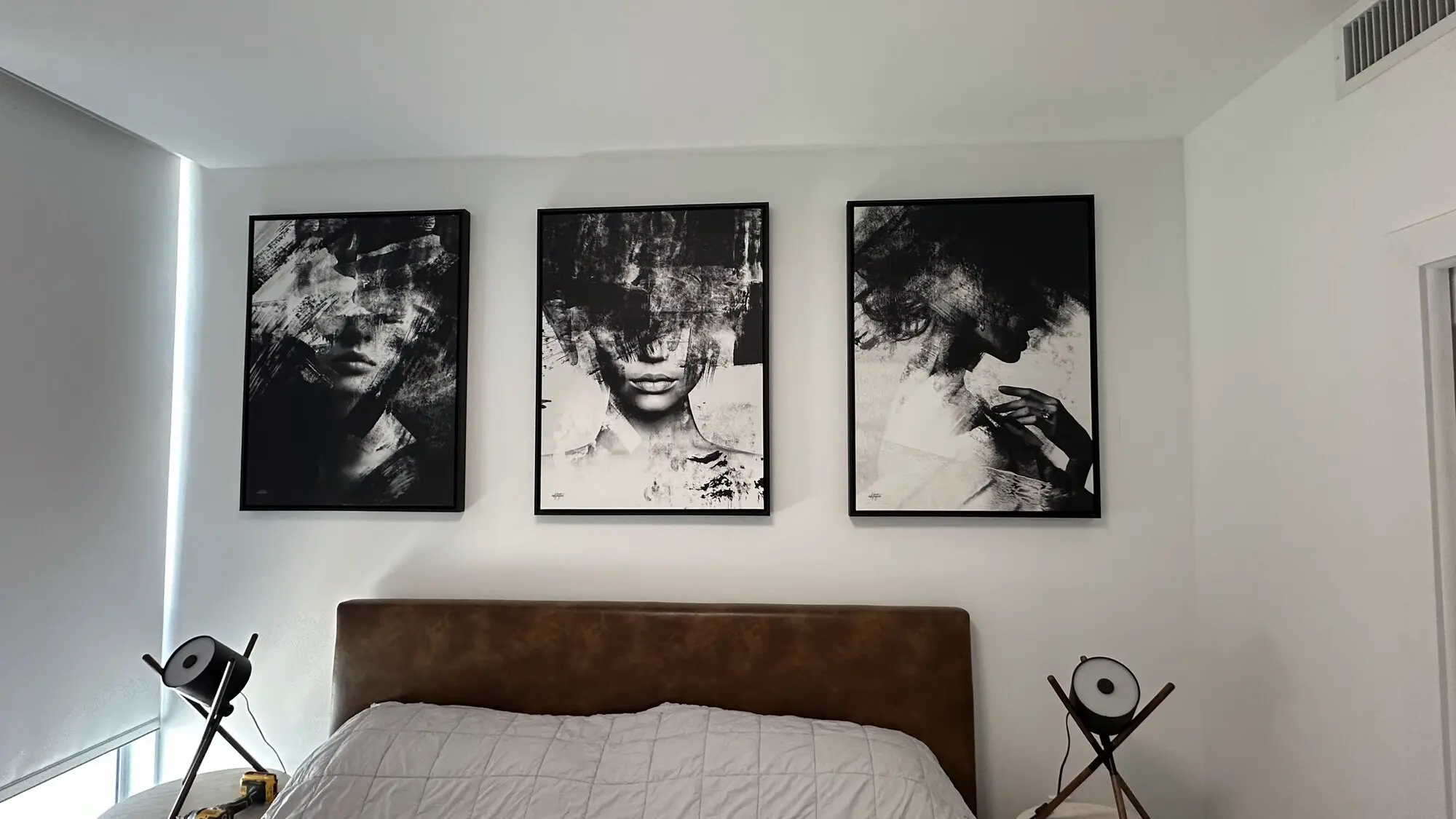
Galleries and museums standardize on roughly 57 to 60 inches from the floor to the center of the artwork, because that’s average standing eye level. It’s a genuinely good default in a home too. The exception is art hung above furniture, where you want 6 to 10 inches of breathing room above the sofa back or headboard rather than measuring from the floor.
Weight and wall type decide everything. Under 20 lb into drywall, a good self-drilling anchor or a picture hook is fine. Between 20 and 50 lb you want a toggle or a snap-toggle. Over 50 lb — most large mirrors — it belongs on framing or a masonry anchor, full stop. On concrete block it’s a hammer drill and a sleeve anchor. Guessing here’s how mirrors end up on the floor.
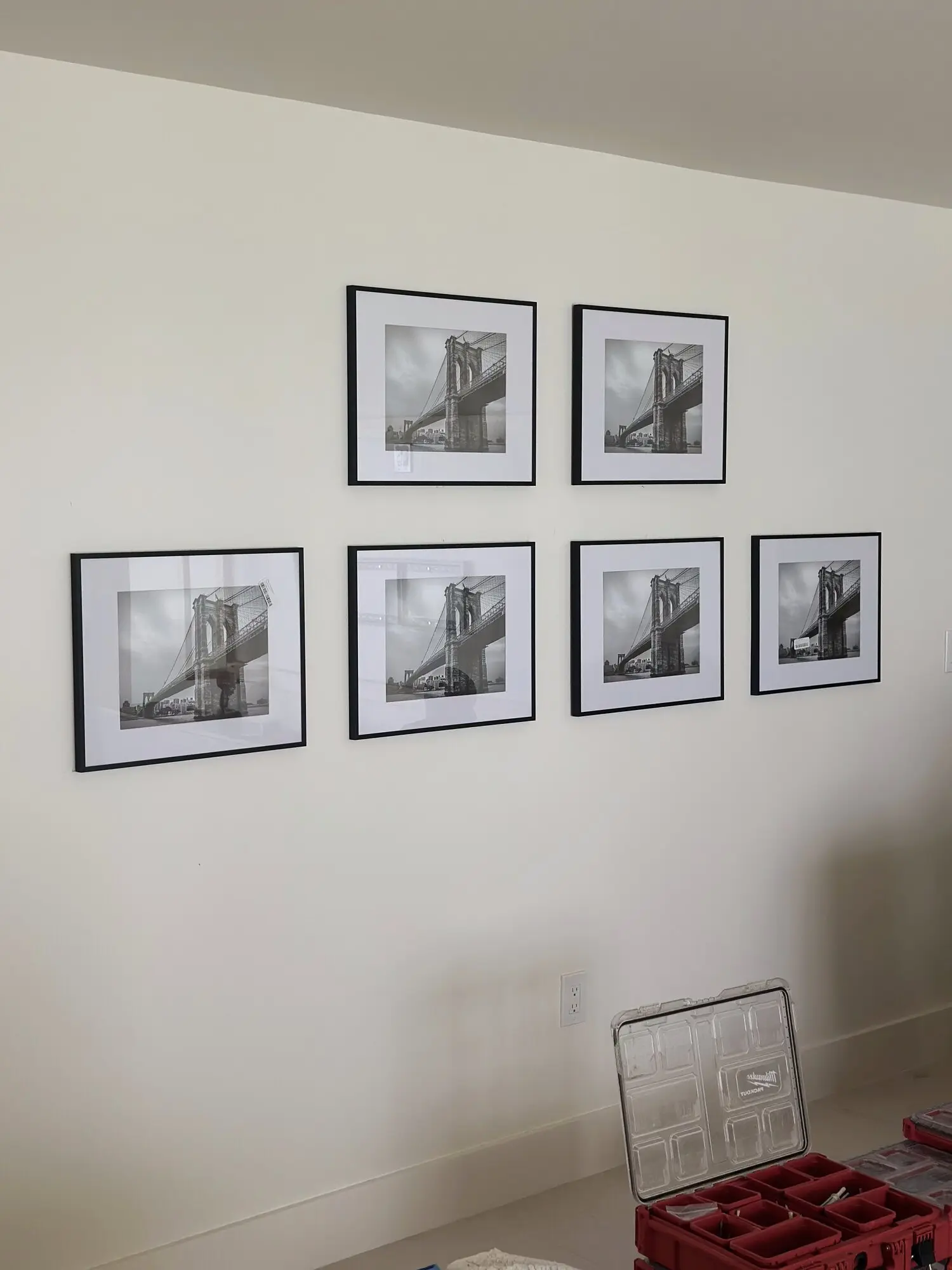
The trick is consistent gaps — usually 2 to 3 inches between frames — and treating the whole group as one rectangle with the center of that rectangle at 57 inches. Mixed frame sizes work as long as the outer edges align on at least one axis. I lay it out on the floor first so you can move things before anything is permanent.
What this costs
Single pieces are quick. Gallery walls and heavy mirrors take longer because the layout is the work.

Roughly 50 lb is where I stop trusting drywall alone even with good toggles. Above that it goes into framing or masonry.
Yes — that’s most of South Florida. Hammer drill, masonry bit, correct anchor. It holds better than drywall ever will.
Yes, both hardwired on existing points and the plug-in and battery types that need no wiring.
No hard feelings. Here’s how to do it properly.
Also useful
Flat screens mounted dead level on wood studs, concrete block or metal framing — with the cables hidden and the bracket torqued to spec.
Learn moreCloset systems, floating shelves and overhead garage racks — anchored into real structure so they carry the load you actually put on them.
Learn moreHoles, cracks and anchor damage patched so you can’t find them afterwards — plus trim, baseboard, doors and built-ins.
Learn moreSend a photo of the job and get a straight answer, a real price and a date — usually the same day you ask.