Art & Mirror Hanging
Gallery walls laid out properly, heavy mirrors anchored safely, big canvases hung dead level and centered.
Learn moreTV Mounting
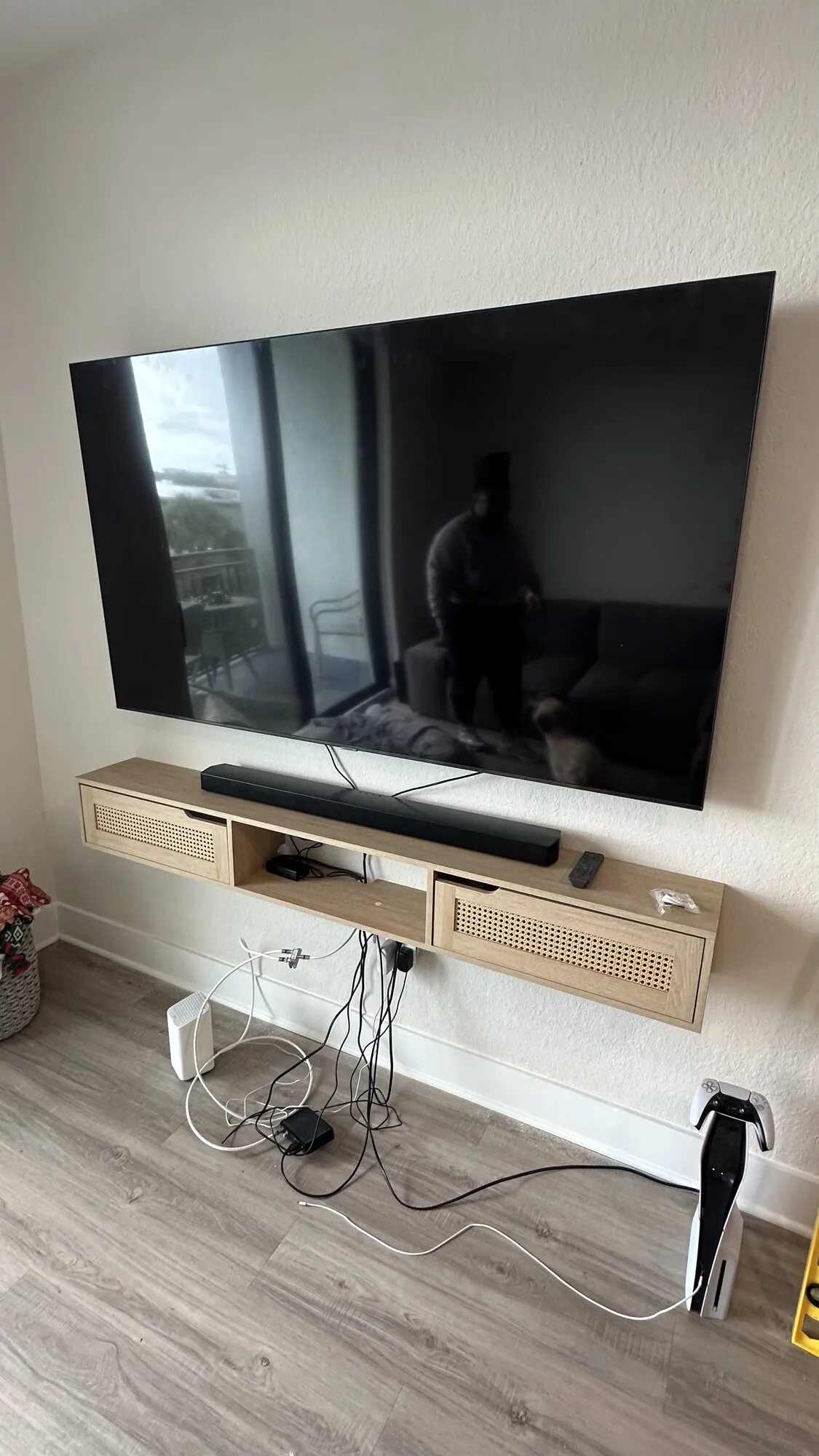
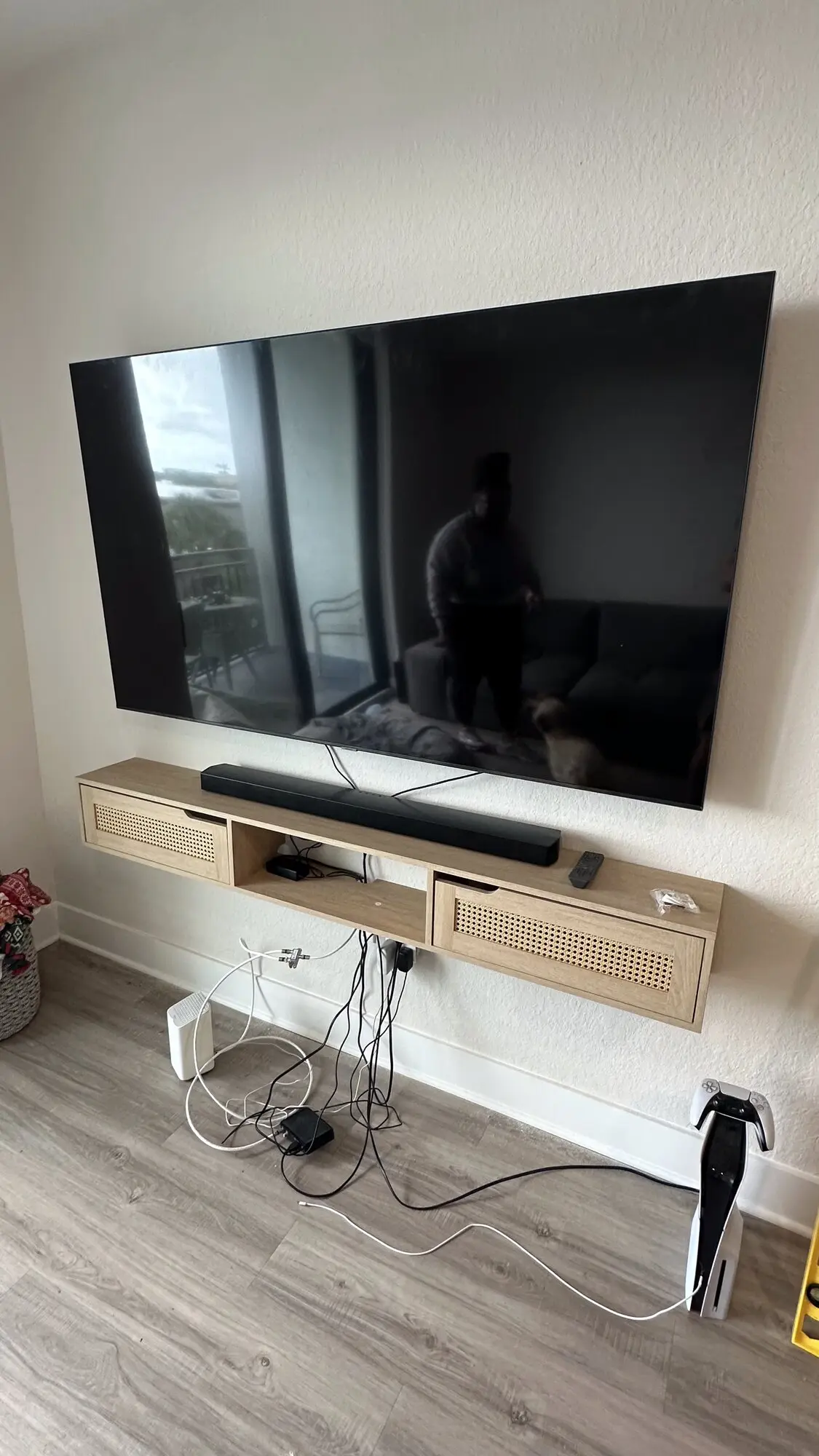
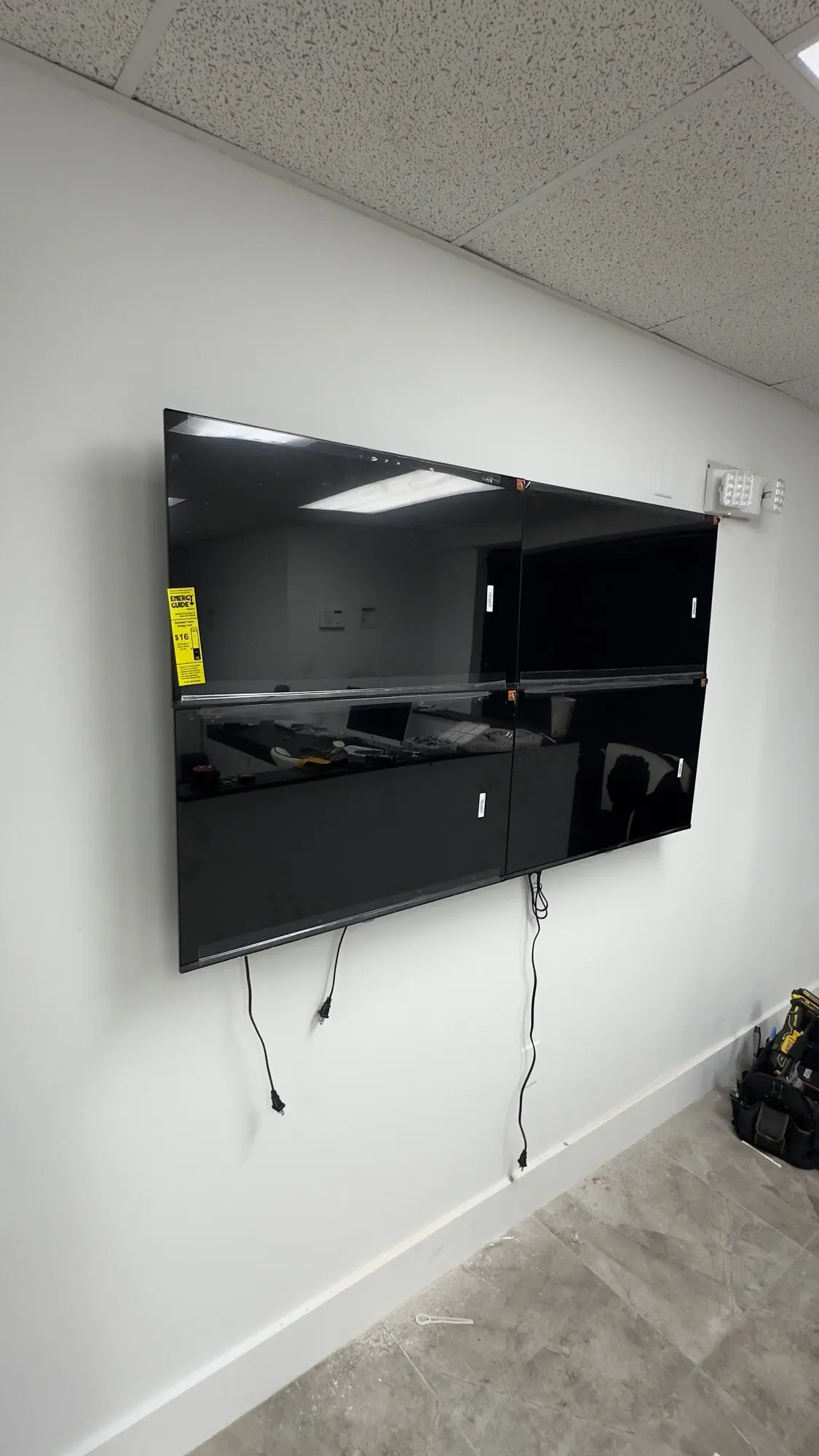
A TV on the wall is the single most common thing people call a handyman for, and it’s also the job most often done badly. A mount screwed into drywall instead of framing. A screen two inches out of level. A tangle of black cables hanging down a white wall. All three are avoidable.
Every TV I mount gets located against actual structure — wood studs, metal studs with the right toggles, or concrete block with sleeve anchors, which is what most South Florida construction is behind the paint. The bracket is leveled with a laser, the lag bolts are driven to depth, and the cables come down inside the wall or inside a paintable raceway before I leave.
Most homes and condos here are CMU (concrete masonry unit) construction with furring strips and drywall over the block. A stud finder will beep at the furring strips, which hold almost nothing. Mounting into block needs a hammer drill, the right masonry sleeve anchor, and enough embedment depth — done properly it’s far stronger than a wood stud, done wrong it pulls straight out of the drywall. This is the difference between a fifteen-minute job and a fifteen-minute job that ends with a broken TV.
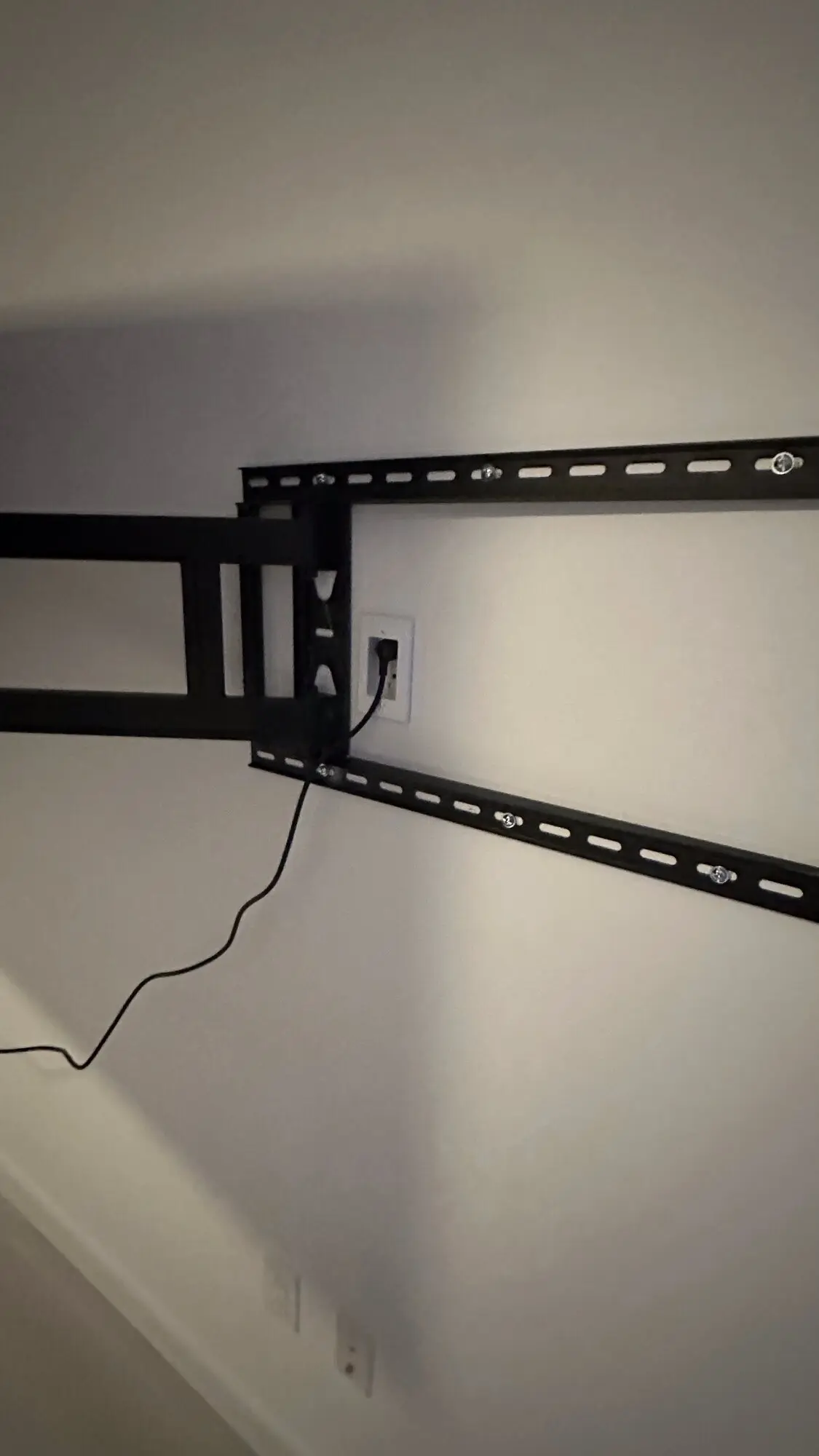
You can’t legally or safely run a standard TV power cord inside a wall — the sheath isn’t rated for in-wall use. The correct fix is a recessed power kit: an outlet behind the TV fed from the existing receptacle below, with in-wall rated (CL2/CL3) HDMI running alongside. Where the wall is solid block, a slim paintable raceway gets you 90% of the clean look with none of the demolition.
The usual advice is "center of the screen at eye level when seated," which lands most 65-inch TVs at roughly 24 to 28 inches from floor to the bottom of the screen. Above a fireplace or a console it usually has to go higher — that’s fine, but it wants a tilting mount so you aren’t craning your neck. I’ll tell you before drilling if the height you asked for is going to be uncomfortable.
What this costs
Most standard mounts are a single short visit, plus the mount and any concealment hardware. In-wall cable runs and above-fireplace installs take longer — you get the number before I start.
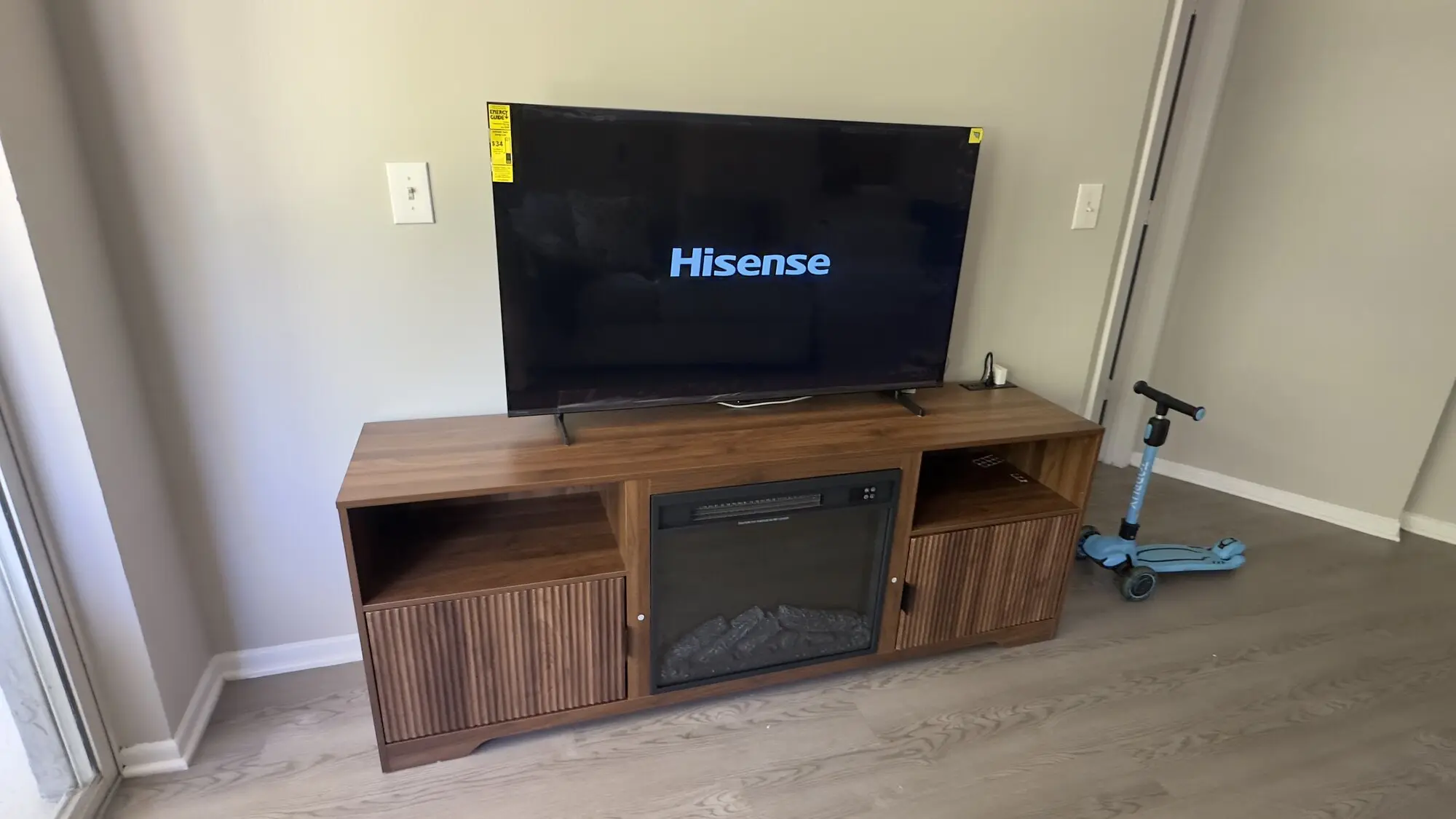
I can, or you can buy your own. If you want me to bring one, tell me your TV size and whether you want fixed, tilting or full-motion and I’ll source it at cost plus the pickup time.
Yes, on a tilting or full-motion mount so the viewing angle works. Two things to check first: heat above the firebox, and whether there’s power and signal up there. I’ll assess both on arrival.
On drywall or wood-frame walls, yes — with a code-compliant recessed power kit and in-wall rated cable. On solid concrete block, a paintable raceway is the practical option.
Very common here. Interior partition walls are almost always fine; exterior/demising walls sometimes need HOA sign-off. Check with your association first and I’ll work to whatever they allow.
No hard feelings. Here’s how to do it properly.
Also useful
Gallery walls laid out properly, heavy mirrors anchored safely, big canvases hung dead level and centered.
Learn moreTired switches and loose outlets replaced, dimmers and smart switches installed, cover plates brought back to matching.
Learn moreThe whole list in one visit — sticking doors, loose cabinet hinges, torn screens, wobbly railings and the rest of it.
Learn moreSend a photo of the job and get a straight answer, a real price and a date — usually the same day you ask.